In February, numerous online publications reported a unique find — a bronze plaque depicting three bears. The discovery was made by archaeologists from Altai State University and the Institute of the History of Material Culture of the Russian Academy of Sciences during a joint expedition to the Chumysh-Perekat site. Sergey Grushin, a leading expert at the Greater Altai Research Center for Altaic and Turkic Studies and professor in the Department of Archaeology, Ethnography, and Museology at Altai State University, described how the monument was discovered and what other exceptional artifacts the team unearthed.
The find occurred by chance. Back in 2012, scientists from Altai State University were surveying the area as part of a contract project linked to the proposed construction of a gas pipeline. The project envisioned a route through Altai Krai and the Altai Republic, extending to the Chinese border. The university served as one of the contractors responsible for identifying archaeological sites along the Altai Krai section of the proposed route.
While studying the area near the planned pipeline in the Zalesovsky District, archaeologists initially found no traces of ancient monuments. One weekend, having heard from tourists about a local landmark known as Perekat, the researchers decided to visit it.
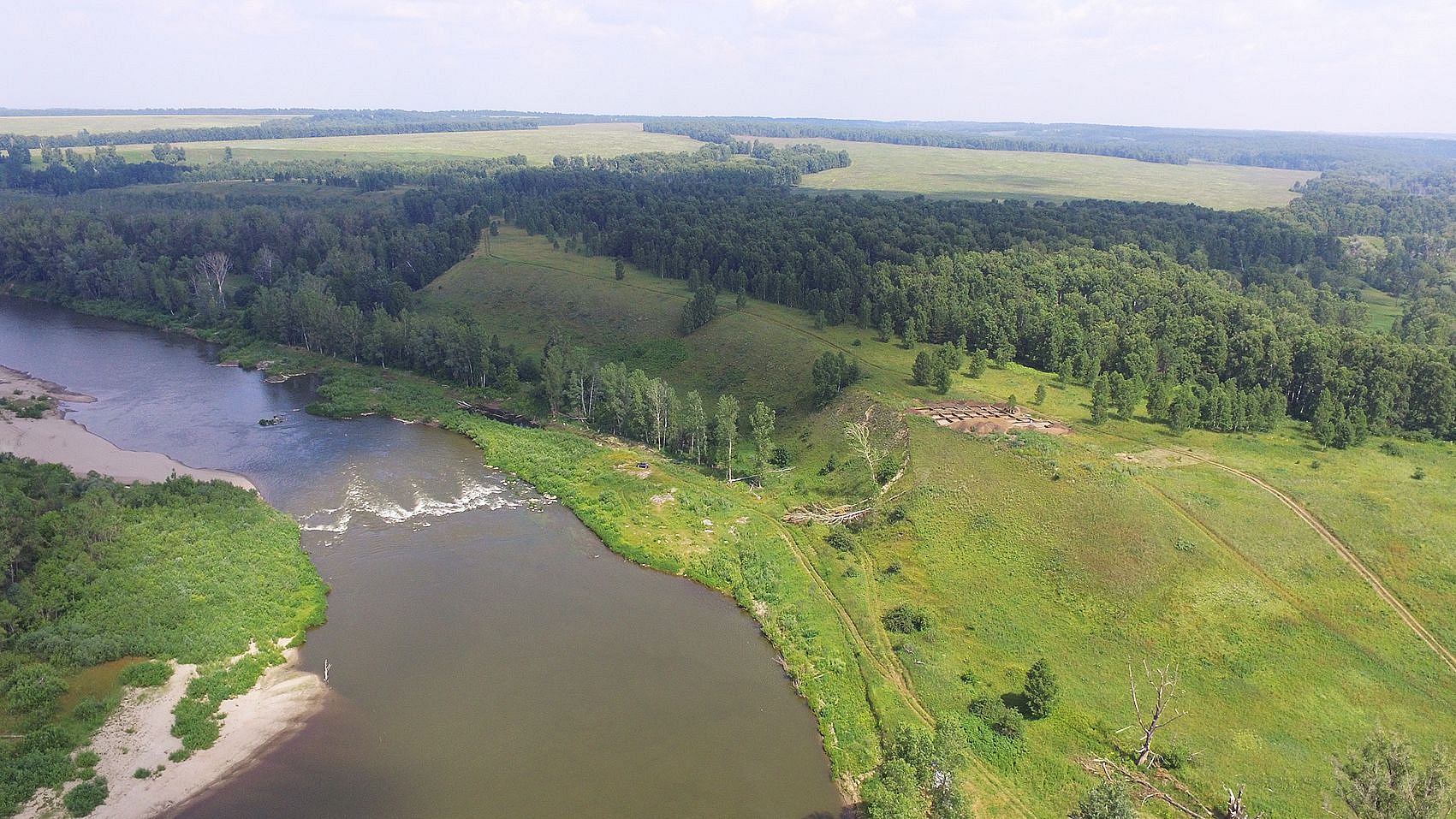
“The place turned out to be beautiful: the Chumysh River makes a sharp 180-degree turn there, flowing into a rocky outcrop that forms a rapid,” recalls Sergey Grushin. “I was surprised that in Altai Krai, barely 100 kilometers from Barnaul, there are rapids that look almost like those of a mountain river. On the opposite bank rose a high terrace cape, eroded by the Chumysh River, exposing the coastal strata. Drawing on my experience, I hypothesized that the cape might contain an ancient monument — possibly a burial site, as necropolises were often located on elevated river terraces."
In autumn 2012, archaeologists began excavations at the site and discovered human remains. After minor clearing, they revealed a burial and a polished stone adze, which made it possible to date the complex to the Neolithic period.

This discovery marked the beginning of long-term research. From 2014 to 2019, archaeologists from Altai and Kemerovo State Universities held joint expeditions, involving students from both institutions.
The excavations yielded stunning results. The cape turned out to contain several necropolises dating back to different historical periods — the Neolithic, Bronze Age (Andronovo and Irmen cultures), Early Iron Age (Kamen culture), and the Early Middle Ages (7th–8th centuries CE). Nearby, on a lower terrace, the team discovered settlement sites containing pottery and Late Bronze Age artifacts.
The earliest complex, dated by radiocarbon analysis to about 6,000 BCE, belongs to the Neolithic era. Only about a dozen similar sites are known in Altai, making each new discovery highly valuable. Among the finds, a distinctive horn staff pommel carved in the shape of an elk’s head stands out. While similar objects are known from Siberia, none had previously been found in Altai burial complexes. The elk motif likely held cultic or hunting significance during the Neolithic, as it appears not only in artifacts but also in petroglyphs.
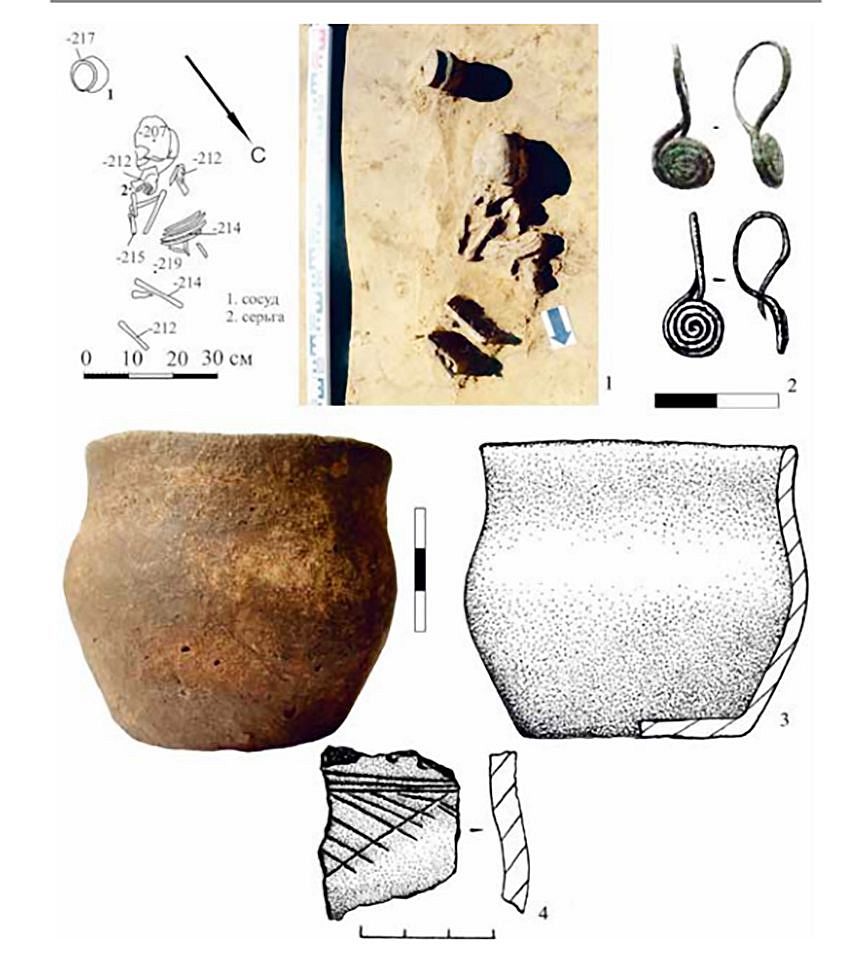
Of particular interest is the early medieval complex (7th–8th centuries CE), which contains remarkable materials still under analysis. Some have already been introduced into scientific circulation. The site is notable for several distinct burial groups, each with a unique set of grave goods.

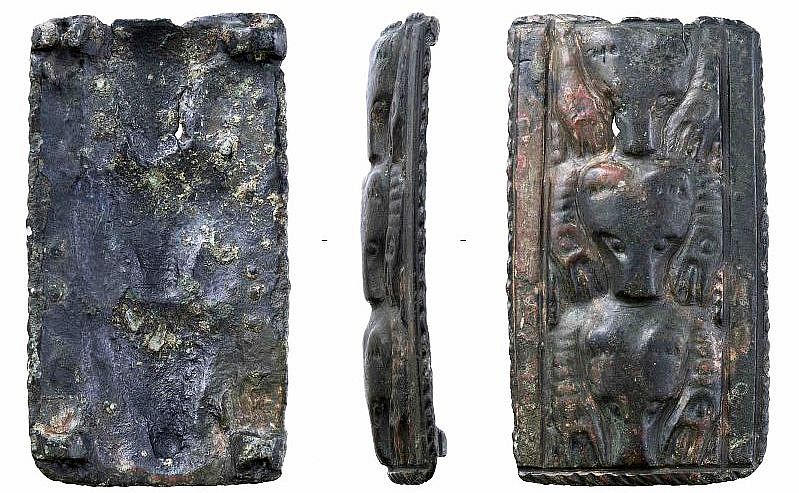
“Among these are burials reflecting Turkic traditions of the Altai Mountains — for example, a grave with a horse, weapons, harness, and so on. Another demonstrates northern, taiga cultural elements. In particular, this is the burial of a woman over 50 years old — a considerable age for the time — who had lost most of her teeth. A bronze plaque depicting bears in a sacrificial pose was found in her grave. Similar objects are known from the taiga zone of Western Siberia; the Chumysh-Perekat plaque marks the southern boundary of their distribution.”
A third group, represented mainly by ceramics and female burials, reflects the local cultural traditions of the Upper Ob population (the Odintsovo culture).
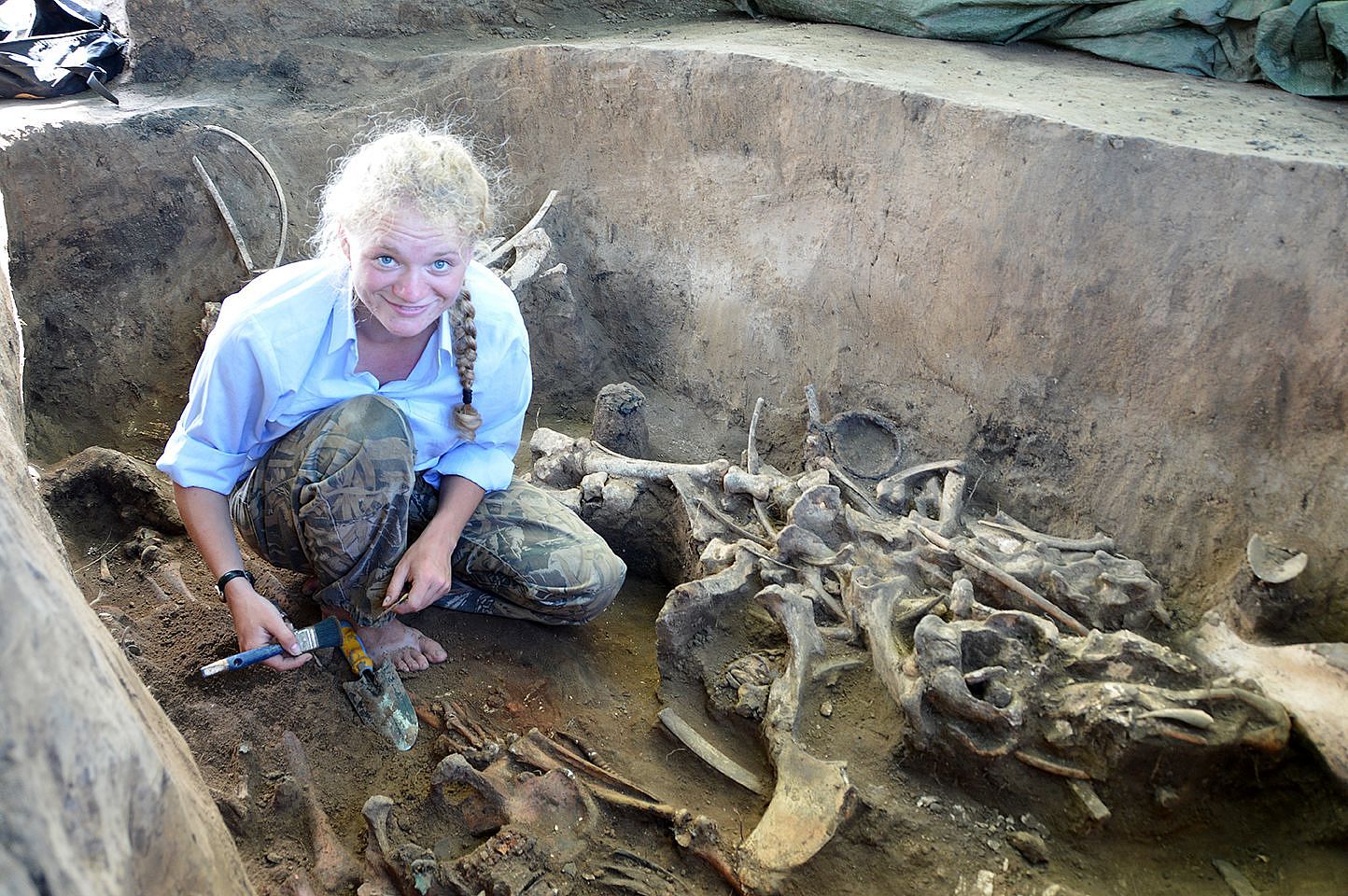
During the investigation of the Chumysh-Perekat site, archaeologists discovered numerous organic remains: in some burials, hair and fragments of a woman’s headdress, even a braid, were preserved. These findings require careful, detailed study.
One of the most intriguing discoveries is a tiered burial, where two women were interred one above the other.

One of the most remarkable objects is the so-called tiered burial, where two women were interred one above the other. The upper burial, belonging to a woman, contained only a single pot, whereas the lower burial was richly furnished with grave goods, including bronze objects, jewelry, and other items. Among them were a necklace of bronze plaques, a braided headdress, and numerous pendants. This is most likely the burial of a noblewoman accompanied by a subordinate or a lesser noblewoman.
A distinct group of male burials is also notable at the site, featuring warriors buried with their horses and weapons, as well as interments of unmounted foot soldiers.
"We examined an assemblage of stirrups and horse bits and also discovered an interesting series of bone and horn objects known as kochedyki. This collection of kochedyki is among the most representative for burials of that period. Typically, such objects are found individually. We had several, of varying types. Researchers believe these tools were used for untying knots. They are ornamented horn points with decorative handles designed for hanging. For nomads, such tools were indispensable, as they constantly worked with leather straps and knotting materials. Modern traditional nomadic societies continue to use similar instruments, confirming their practical function."
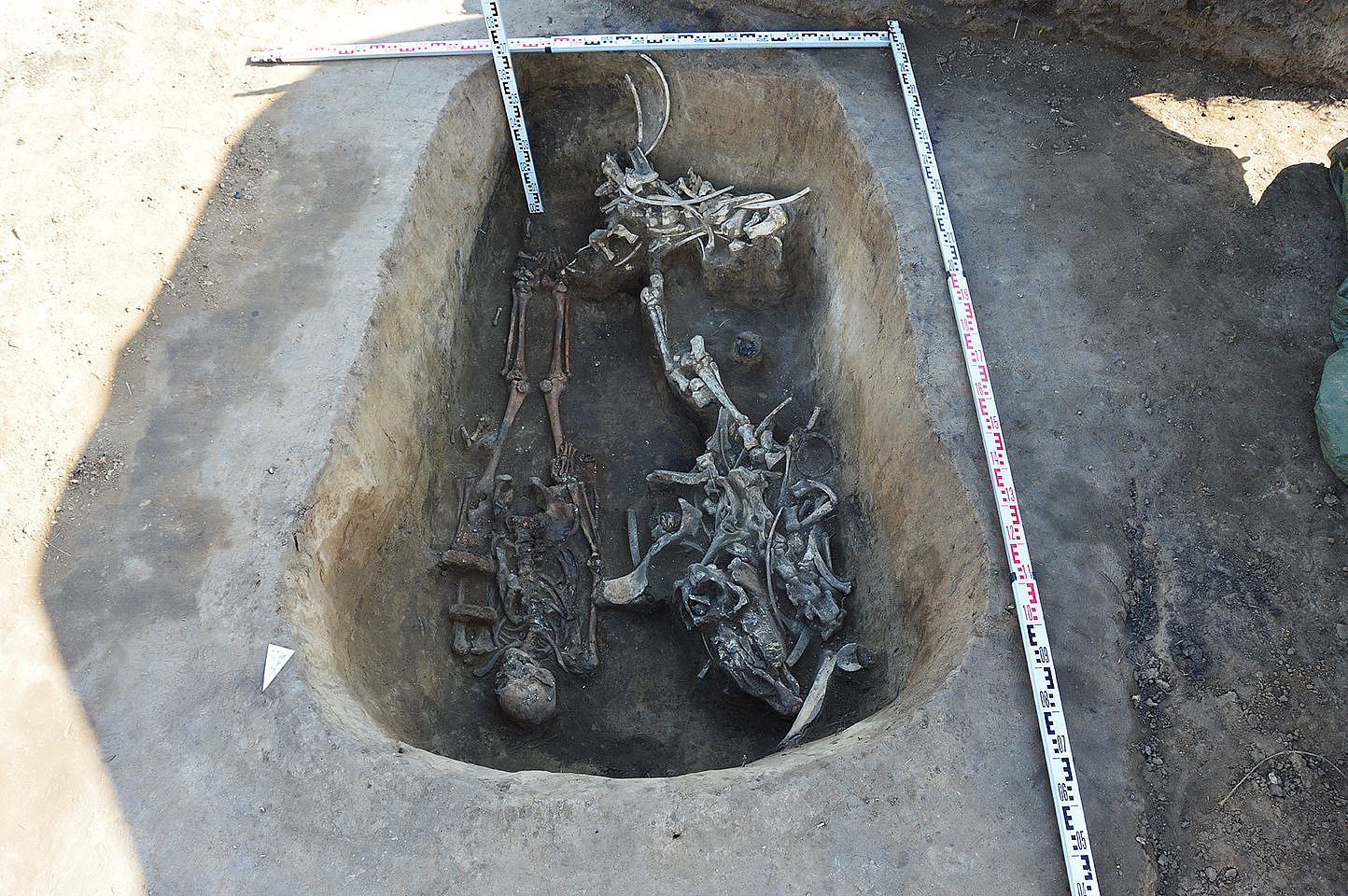
In addition to the burials, the site also revealed altars containing horse and cow skulls, as well as so-called sacrificial kits — sets of horse bones carefully gathered and buried in leather bags.
“Such finds indicate the existence of various ritual practices: horse meat was probably used in funeral feasts, or the animal itself served as a sacrificial offering,” explained Sergei Grushin.

Chumysh-Perekat is a unique archaeological site that reflects the region’s millennia-long history spanning from the Neolithic period to the Middle Ages. Its geographical location, multilayered cultural context, and abundance of artifacts make it a valuable source of knowledge about the ancient and medieval cultures of Altai, enabling the study of the population’s ethnic composition, religious beliefs, and social structure.
Fieldwork at the Chumysh-Perekat site is still ongoing, and research is expected to continue. At present, scientists are analyzing the collected materials, gradually publishing their findings, contributing to academic discourse, and preparing a monograph.