The South Siberian Botanical Garden of Altai State University is home to Russia’s first plant cytometry laboratory — a true center of innovation in plant biology. Its expertise and methods are already helping researchers across the country obtain more precise scientific results. Mikhail Skaptsov, Candidate of Biological Sciences, Senior Researcher at the Botanical Garden, discussed the laboratory’s work in the newspaper For Science.

“Our laboratory is the first specialized facility in Russia dedicated exclusively to plant cytometry. We began working systematically with plant material earlier than others. While cytometry had previously been used sporadically in plant research—as one of several auxiliary methods—we focused on developing and applying it comprehensively from the very start.
Our research actively employs PCR analysis, DNA cloning (amplification), and other molecular techniques, mainly in plant phylogenetics. Since most of our staff are experienced in PCR-based methods, we also expand our work beyond plants: these approaches can be applied to animal cells and human DNA as well. If there is interest, we collaborate with clients in these fields and, for instance, develop test systems.”

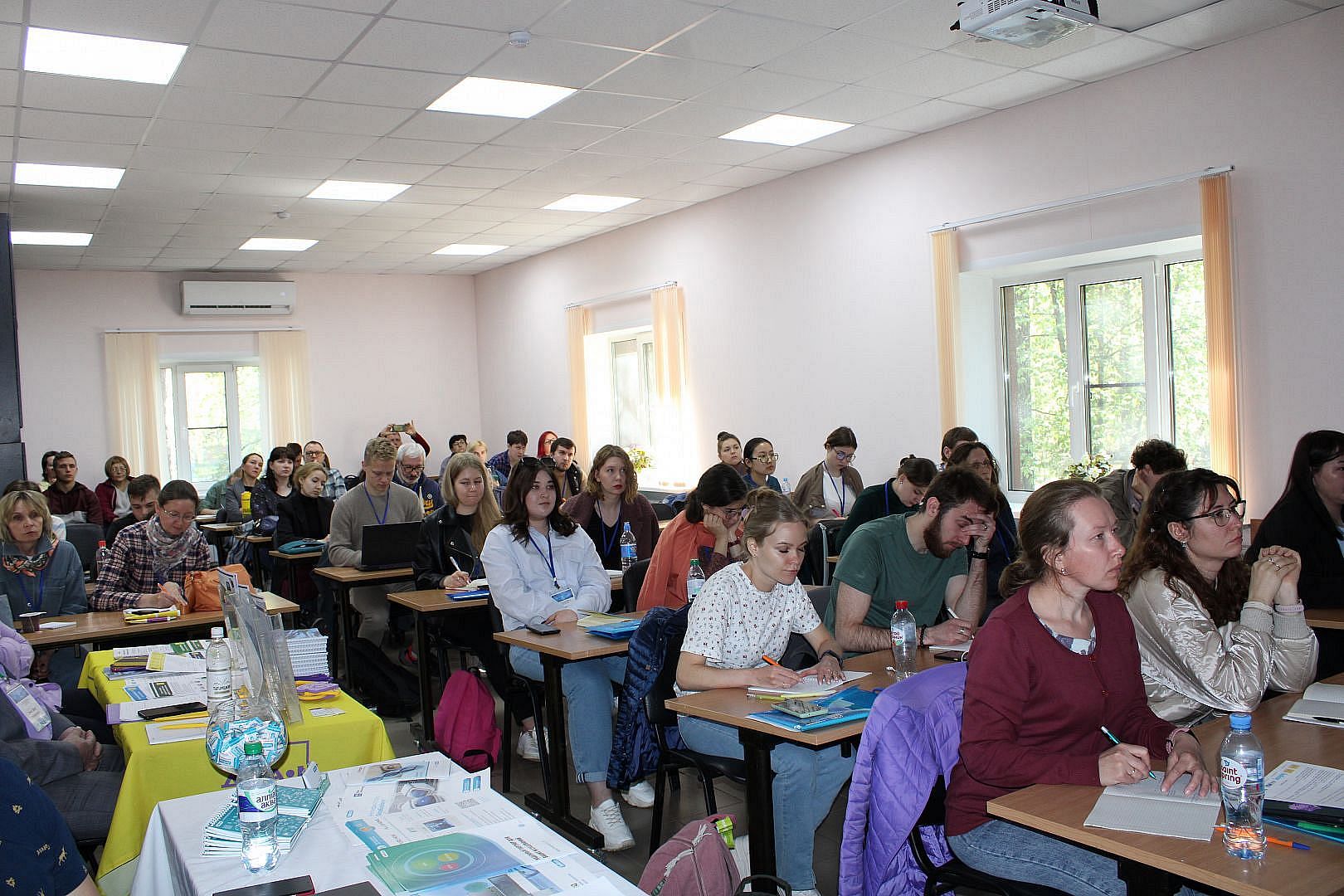


“About five years ago, our laboratory at the South Siberian Botanical Garden organized Russia’s first training school on plant cytometry. Specialists from nearly every region of the country attended, representing universities and research institutes of the Russian Academy of Sciences. Participants came from various disciplines — physiology, genetics, biochemistry, botany, and evolutionary biology. During the school and in subsequent consultations, we focus on typical errors and the key challenges researchers face when applying the method.
Plant cytometry is used across a wide range of biological research areas. The method enables highly accurate genome size measurement and determination of plant ploidy levels. These data help distinguish closely related species, identify polyploid complexes, and study hybridization and speciation. From physiological and biochemical perspectives, cytometry is indispensable for investigating cell cycle regulation and endoreduplication; it opens up opportunities for exploring how environmental factors affect plant development.
Flow cytometry plays a vital role in biotechnology, genetics, and plant breeding. It is used for early screening of hybrid ploidy, monitoring the stability of in vitro varieties, selecting target cytotypes, developing dihaploid cultures, evaluating seed material, and ensuring the genetic purity and stability of valuable plant lines.
Many methodological nuances, however, are not immediately apparent to novice specialists. Most literature in the field is published in English and typically lacks detailed practical explanations — authors often note that a specific method or dye was used but omit how to interpret the results. We have accumulated extensive practical experience—often through trial and error — and now we share this knowledge with colleagues."
At the Plant Cytometry School, participants learn to prepare plant samples for flow cytometry and to determine ploidy and genome size. They also acquire hands-on experience in DNA extraction, PCR analysis, and processing sequencing data.